


For all the fun of the new 48-team World Cup format so far, there is a sense that the tournament is a little too forgiving, with 32 teams surviving the initial group phase.
But there’s good news for those of you who need bit more cruelty with your sporting spectacle: That all ends after Saturday, when the new, and obviously larger and better (this is America after all) knockout phase begins Sunday with Canada facing South Africa.
Here’s everything you need to know about the business end of the World Cup, which begins to look a lot more like the playoff formats we know and love in American sports.
Who gets in?
Every team that finishes first or second in group play gets into the knockout phase. Of course, that would only be 24 teams, so in this expanded World Cup, the top eight third-place group finishers also receive a berth.
Those third-place teams are ranked by points they earn in their respective groups. For those finishing on the same number of points, the tiebreakers go in this order: Total goal difference, total goals scored, best discipline record (yellow and red cards), and then FIFA World Rankings.
The first- and second-place finishers have dedicated, pre-determined slots in the bracket. Those third-place teams that qualify are sorted into the remaining spots by that Ghanaian witch doctor who put a curse on Harry Kane.
OK, so they’re actually sorted by a complicated formula that merely feels like a creation of sorcery. But for American fans, the important thing to know is the U.S. men’s national team will face Bosnia and Herzegovina on July 1 in Santa Clara, Calif.
How does it work?
Unlike the group stage that may feel foreign to fans of American sports, this is good, old-fashioned, single-elimination knockout play. The winner moves on. The loser goes home, though the wealthier players might stop off for a confusingly unappealing vacation in July in South Florida.
Also, the bracket is completely fixed, similar to the NCAA Men’s and Women’s Basketball tournament, rather than the NFL, NBA or NHL Playoffs. There is no re-seeding after each round.
What if the match finishes tied?
In single-elimination matches in the World Cup and most other major competitions, teams play 30 minutes of extra time to decide a tie after 90. Teams switch ends after 15 minutes plus stoppage time, but it’s only a momentary pause.
Extra time is not a sudden-death format In other words, play continues after a goal, allowing a losing team to tie the match again or the winning team to add insurance.
For example, in the 1966 final, England defeated West Germany 4-2 in a final that was tied 2-2 after 90 minutes, and England’s fourth goal lives on as one of the most iconic moments in their national team history.
In the 2022 final, Argentina and France each scored in extra time before Argentina eventually won on penalties following an enthralling 3-3 draw.
The match goes to penalties if still tied after 120 minutes.
What happens in penalties?
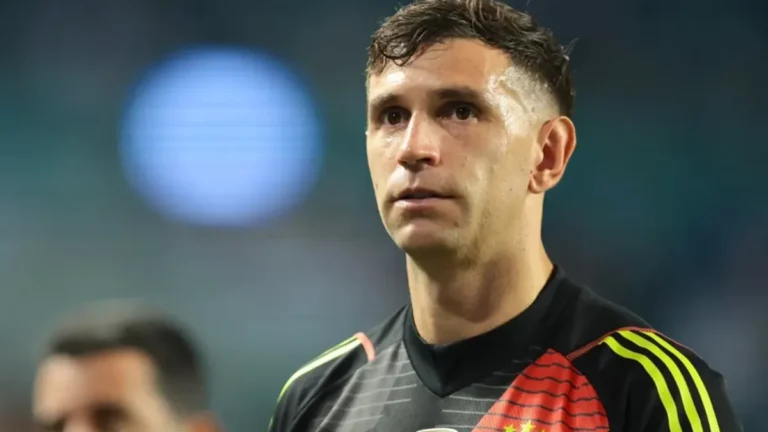
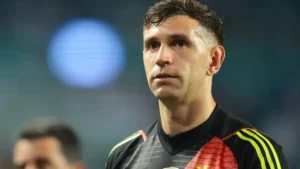
Usually, Emi Martinez. Or Croatia.
Oh, the format. Each team takes five kicks from the spot, and the team that makes more moves on. If tied after five kicks, they go to a sixth, seventh, and so on in a manner similar to extra-inning baseball, where each team gets an additional attempt until there is a winner.
How long does this all take?
With the knockout phase doubled in size, there is an additional round and the process takes a little bit longer. The bracket and schedule is designed so that, at a minimum, every team has three off days between its last match and its next one (with the exception of the third-place match played a day before the World Cup final).
Unlike the NCAA Tournaments or the NFL Playoffs, the bracket so the games feel continuous. The first truly unscheduled day of the tournament won’t come until July 8. And there will only be five idle days in total until the final on July 19.